

DIN FORSYNING – THE SEA IS A RESOURCE
At DIN Forsyning in Esbjerg, district heating is being secured through innovative solutions such as seawater-based heat pumps, which harness energy from the sea to provide sustainable heating.
We have played an active role in the design, development, and commissioning of these advanced facilities, which are key to the utility company’s transition toward greener district heating systems.
The purpose of this comprehensive and complex project is to replace the power station's (Esbjergværket) coal-based heat generation with a sustainable source of energy.
And, among several projects, we have developed and designed the control system for the new heat distribution center, "Ny Krone", ensuring efficient and reliable distribution of district heating.
Using sea-water based heat pumps
We ensure DIN Forsyning’s strategic transition
The green district heating is secured partly by seawater-based heat pumps which we have helped design and commission.
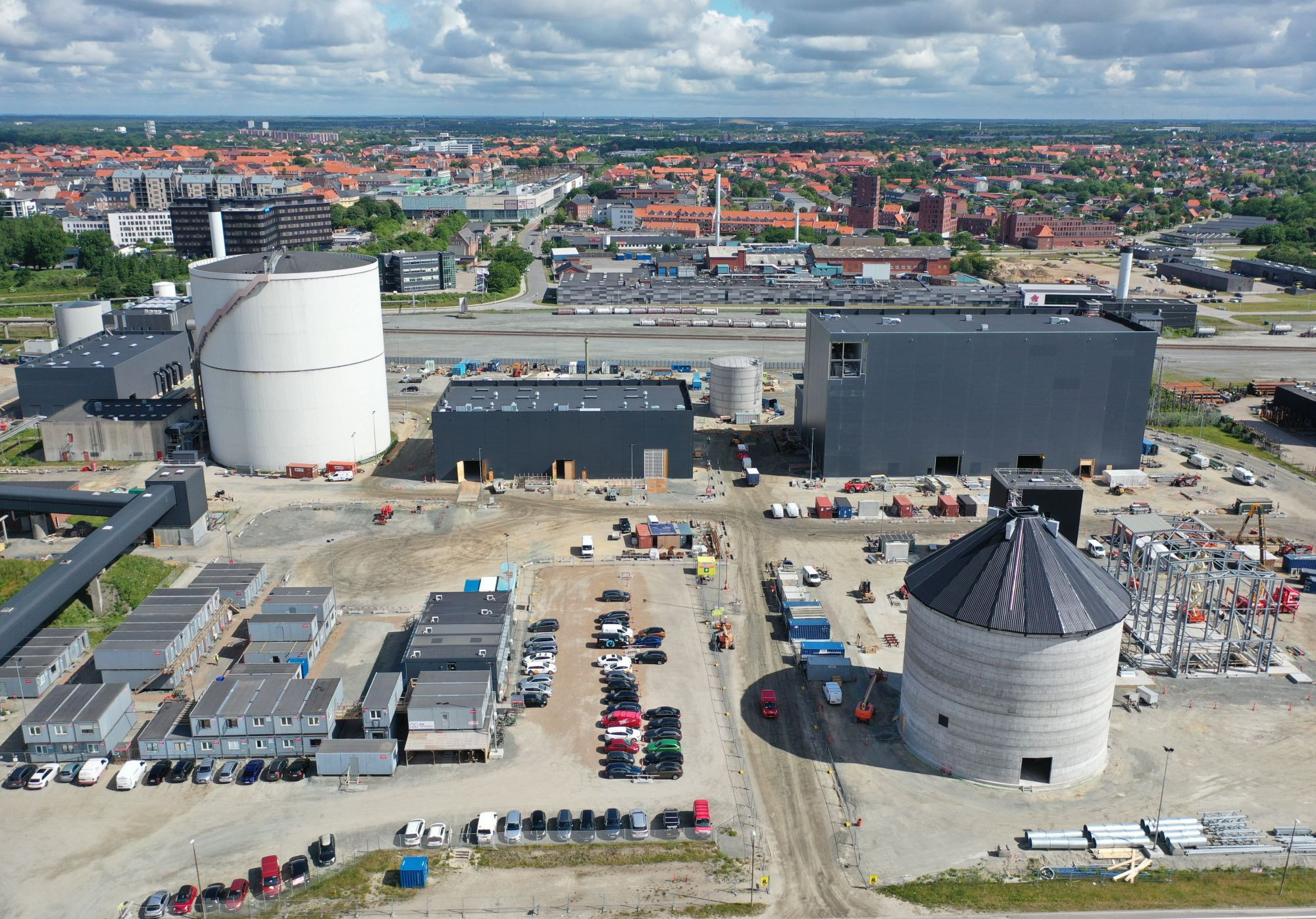
The construction site in Esbjerg includes a wood chip storage, accumulator tank, heat pump building and the new pumping station, Ny Krone, which distributes district heat to end users in the area.
Added Values has designed the control system for Ny Krone and advised on the two large seawater-based heat pumps which heat about 16,000 households.
- Watch the video and learn more from the project director for the district heat project, DIN Forsyning.
Modelling and simulation of ”Ny Krone”
In Added Values, we use model-based design and dynamic simulation and the benefits are significant: This approach allows us to simulate various operating situations and identify possible flaws before commissioning. This has saved time and money. Moreover, not only has the dynamic simulation ensured an efficient and smooth commissioning, but the process has also delivered a quality assurance of the subsequent daily plant operation.
- This whitepaper explains how we have apply model based design and dynamic simulation
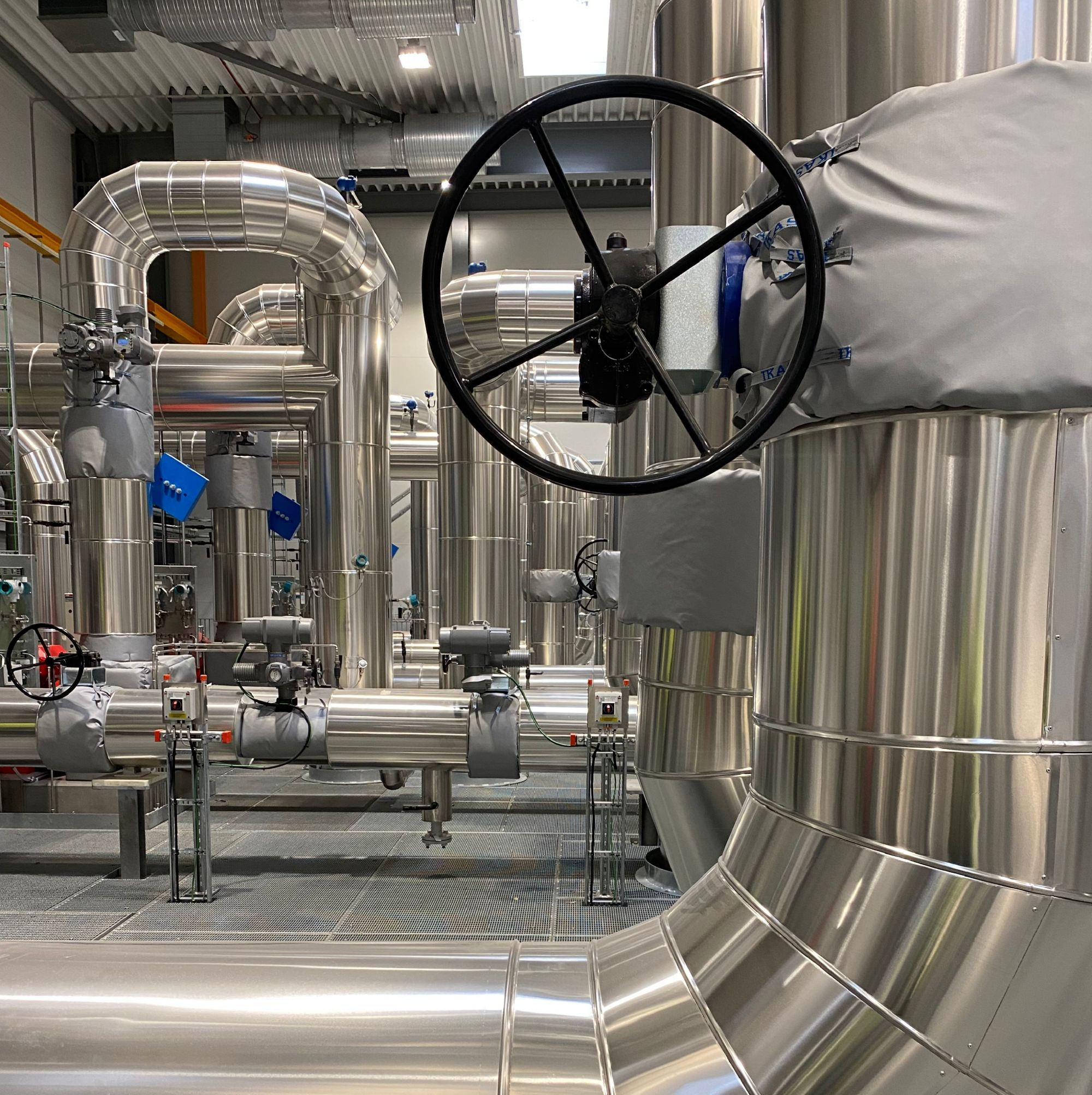
The picture is from inside Ny Krone – the new pumping station that distributes district heating to consumers in the area. We have designed the control and regulation of Ny Krone.
Design of seawater-based heat pumps
An ordinary, small household heat pump “lives” on cooling an air stream that is sent through an outdoor module. In the same way, the heat pump in Esbjerg “lives” on the supply of 14000 m3 of seawater. An hour! The seawater is sucked in through specially designed filters, which sort out fish without damaging them.
From these filters, the water is pumped 600 meters to the actual heat pumps, where heat is pulled out of the seawater. Then the water is returned to the sea; now a few degrees colder. This happens through the approx. 2 x 1500-meter pipes with a diameter of approx. 1.2 meters each.
Learn more about our design of these fascinating seawater-based heat pumps by subscribing to this article.

Torkild talks about the seawater heat pumps
In this video, recorded at DIN Forsyning April 2026, Torkild Christensen, who is one of Added Values' specialists in seawater heat pumps., explains how seawater is pumped in through the evaporators and discharged, cooled, back to the sea 900 meters further along the quay in Esbjerg.
Torkild also explains how a so-called “pig” is used cleaning the pipeline due to fouling.
If you would like to learn more about the “pig” (and watch the video showing it passing through the pipe) and at the same time learn why seawater is a challenge in process plants, please find our article HERE.